
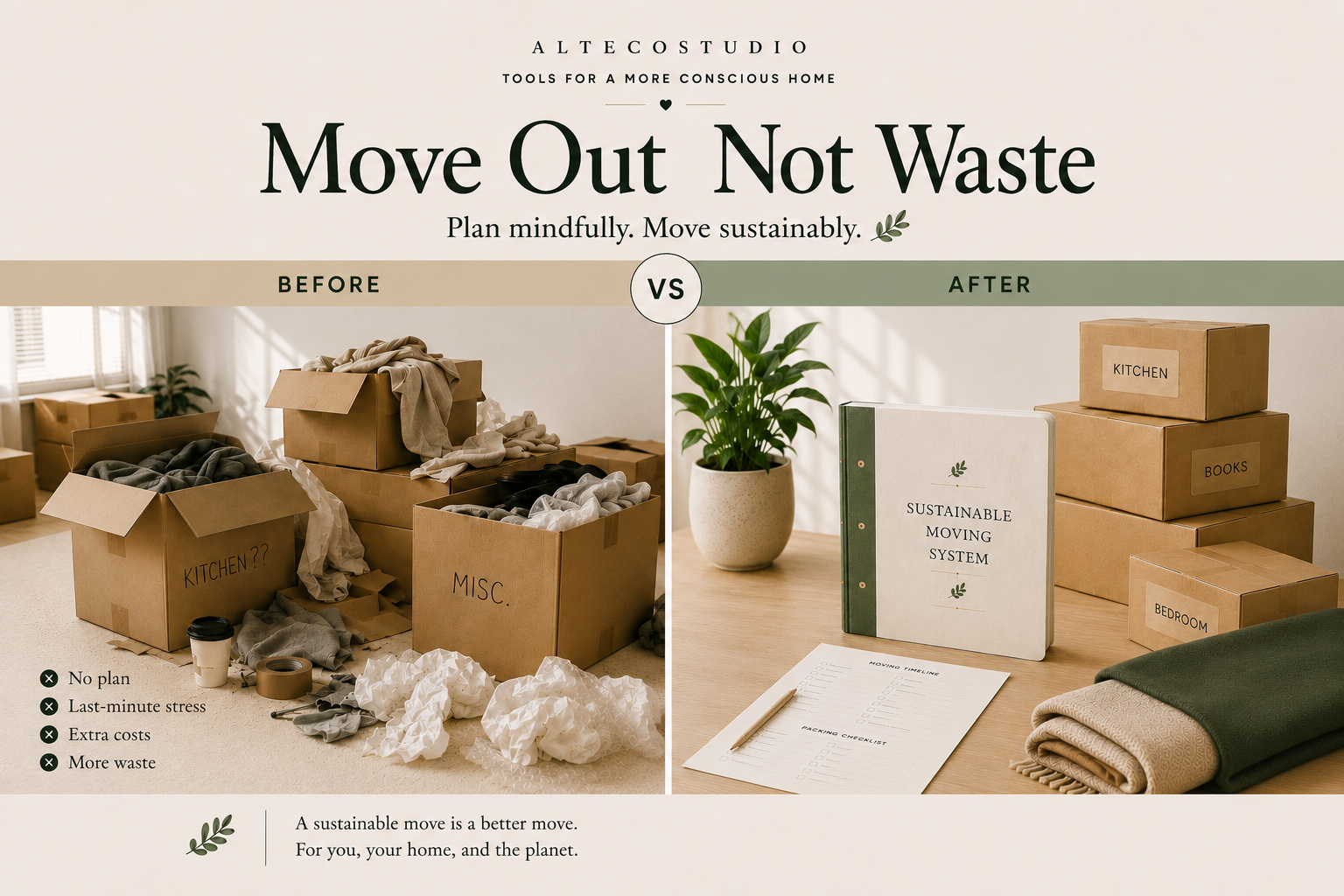
Moving day usually means plastic bags everywhere, wasted tape, and boxes that end up in the trash a week later. But a sustainable move doesn’t just cut down on waste — it also saves you money and time, because it forces you to plan instead of improvising as you go.
Here’s how to do it, step by step.
1. Start by letting go of what you don’t need
Before you pack a single box, do a decluttering round. Every move is the perfect chance to ask yourself if you really need everything you own. Donate, sell, or give away what you don’t use — you’ll pack less, carry less, and create less waste.
This step also saves the most time later: fewer items means fewer decisions to make when you’re unpacking in your new home.
2. Use reusable packing materials
Instead of buying new cardboard boxes, look for reusable options:
- Reusable plastic bins (you can rent or borrow these)
- Used cardboard boxes from local stores or neighbors who just moved
- Suitcases, laundry baskets, and containers you already own
To protect fragile items, swap bubble wrap for towels, blankets, or clothes you’re packing anyway. It’s a simple way to cut down on what you need to buy while keeping things sustainable.
3. Organize by zone, not by urgency
One of the biggest mistakes in a move is packing with no system, which later forces you to open every box just to find one thing. Packing by zone (kitchen, bathroom, bedroom) and labeling each box with its contents and destination avoids that chaos — and keeps you from buying duplicates because you can’t find what you already packed.
A checklist with real deadlines (booking movers, updating your address, disconnecting utilities) is what separates an organized move from an improvised one.
4. Donate what you’re not taking, don’t trash it
Everything you decided not to bring in step 1 can get a second life. Look into donation centers, community swap groups, or secondhand buyers near you. Throwing away less is, in the end, the simplest and most effective sustainable habit you can apply to a move.
5. Plan moving day ahead of time
The stress of moving day almost always comes from lack of planning, not the move itself. Confirming transport times, having water and snacks ready, and knowing exactly which box goes in which room of your new home is the difference between a chaotic day and a manageable one.
A checklist that makes all of this easier
Following these steps manually works, but having a printable checklist ready — with zones already organized, a task timeline, and a packing system already defined — saves hours of planning.
If you want a ready-to-use tool, check out the Sustainable Moving Checklist — a digital moving planner with a packing list and timeline, ready to print or use on tablet.
For more practical guides on building sustainable habits at home, visit AltEcoStudio.
Have you moved using sustainable habits before? Tell us what worked for you.