
Practical guides for a more intentional home
Practical resources and guides to help you make more intentional choices at home, reduce waste, stay organized, and build sustainable habits that actually fit your everyday life.
How to Save Money by Making Sustainable Changes at Home
Learning how to save money and reduce waste at home doesn’t require major lifestyle changes. Most people don’t realize how much money they spend on disposable products every year.
The good news? Living more sustainably doesn’t have to mean spending more money. In fact, some of the simplest eco-friendly changes can help reduce household expenses while cutting down on waste at the same time.
The challenge is knowing where to start.
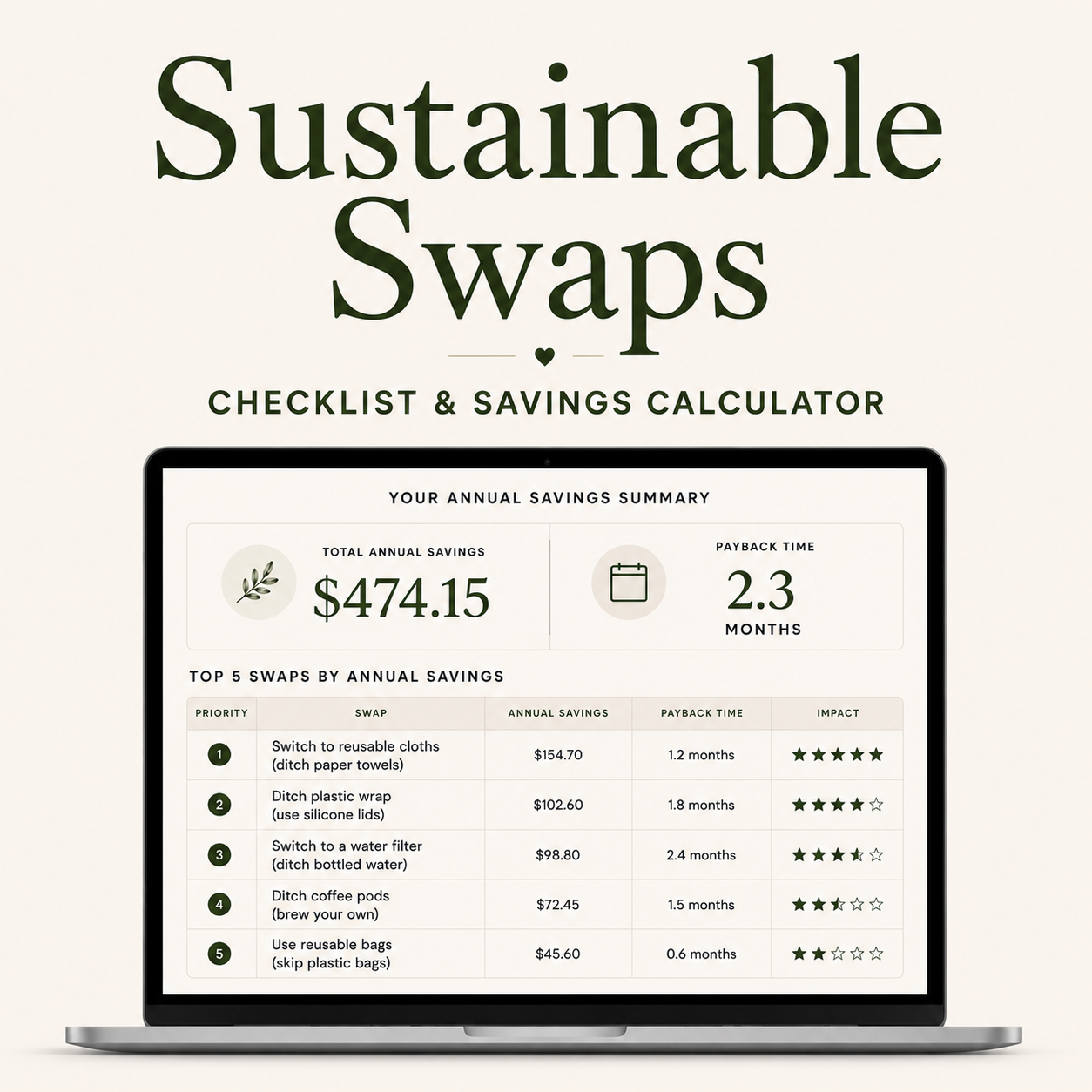
That’s exactly why we created the Sustainable Swaps Checklist & Savings Calculator — a practical tool designed to help you identify the sustainable changes that can make the biggest difference for both your budget and the environment.
Learning how to save money and reduce waste can start with a few simple swaps. Instead of trying to overhaul your entire lifestyle overnight, you can focus on the swaps that provide the greatest return, track your potential savings, and make progress at a pace that feels realistic and sustainable.
What’s Included?
- An 8-page printable checklist
- 24 sustainable household swaps, organized by potential savings
- An interactive Savings Calculator for Excel and Google Sheets
- Personalized savings estimates based on your own habits and spending
- Instant digital download
5 Sustainable Swaps That Make the Biggest Difference
Not every swap saves the same amount, which is why prioritizing matters. A few examples that consistently show up as high-impact:
- Reusable cloths instead of paper towels — one of the fastest paybacks, often under 2 months.
- A water filter instead of bottled water — higher upfront cost, but the savings add up quickly over a year.
- Reusable coffee pods — small daily habit, noticeable yearly savings.
- Reusable bags — the simplest swap to start with, almost no upfront investment.
The key isn’t doing all of these at once. It’s picking the one or two with the fastest payback for your household and starting there.
Smarter Decisions, Real Savings
Every household is different. A change that saves one family hundreds of dollars a year may not have the same impact for someone else. That’s why the calculator helps you see your own numbers, allowing you to prioritize the swaps that make the most sense for your lifestyle.
Start with one or two simple changes, see the savings for yourself, and build a more sustainable home without feeling overwhelmed.
How Much Can You Actually Save?
The answer depends on your current habits — a household that already recycles carefully will see smaller gains than one just getting started. On average, households that track and prioritize swaps using a structured approach see measurable savings within the first 2-3 months, not years. That’s the difference between vague advice like “be more sustainable” and having actual numbers to act on.
FAQ
Common Questions About Saving Money Sustainably
Do I need to save money and reduce waste all at once?
No — trying to overhaul your entire routine in one week is the fastest way to give up. Start with one or two swaps, see the actual savings in your own numbers, and add more once the new habit feels automatic.
Which swap should I try first?
Whichever one has the shortest payback time for your household. That’s exactly what the calculator is built to show you — not a generic recommendation, but your own numbers.
Does this only work for homeowners?
No. Most of these swaps — reusable cloths, filtered water, reusable bags — work the same whether you own or rent, since they don’t require any structural changes.
View the Sustainable Swaps Checklist & Savings Calculator on Etsy